
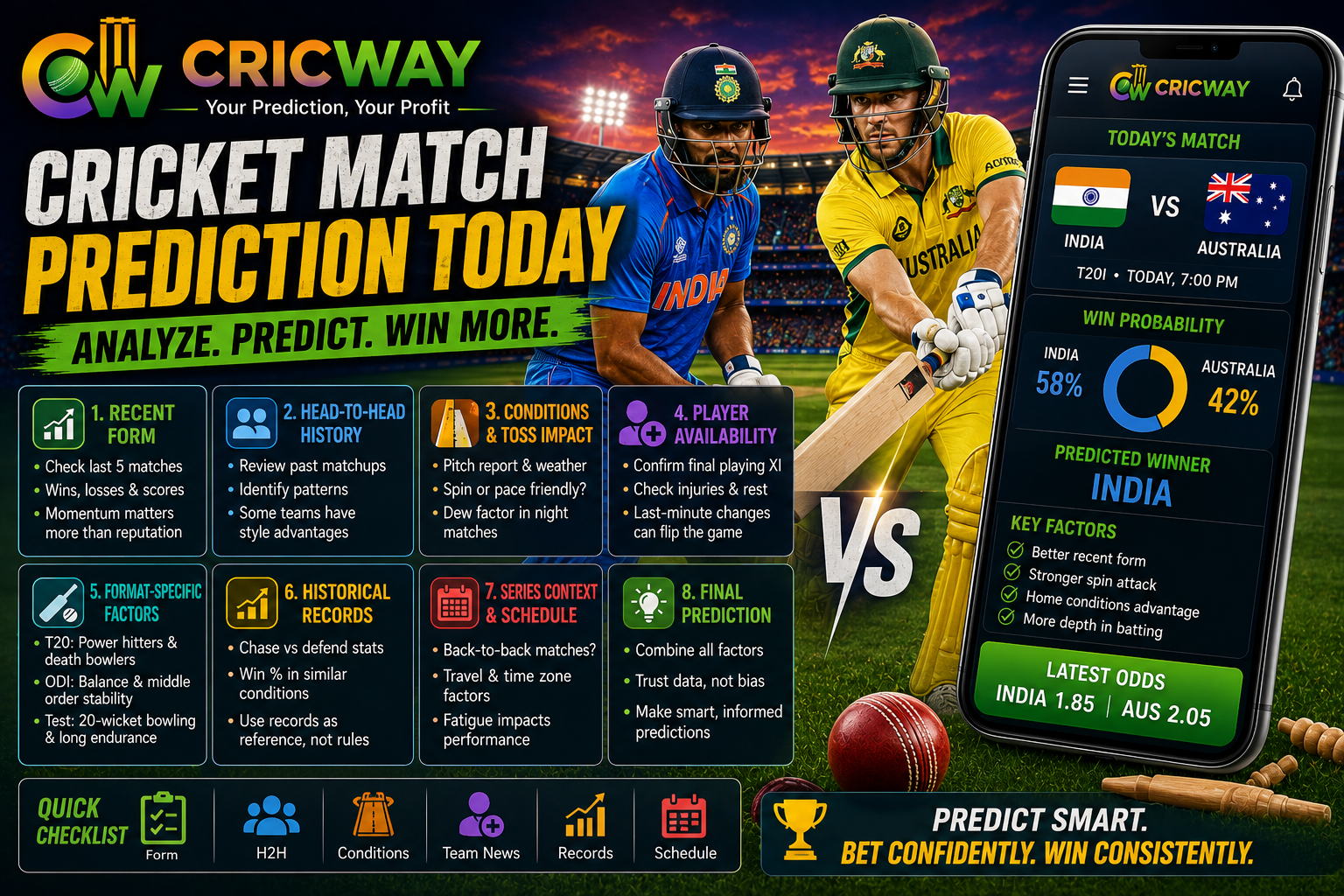

Making an accurate cricket match prediction today isn’t about guessing — it’s about systematically weighing recent form, conditions, and matchup history before a ball is bowled. This guide walks through the factors that actually influence match outcomes, so your predictions are grounded in evidence rather than gut feeling.
Start With Recent Form, Not Reputation
The biggest mistake in match prediction is relying on a team’s overall reputation instead of its current form. A traditionally strong side can be going through a rough patch — injuries, poor batting depth, or a struggling bowling attack. Always check each team’s last five matches before making a prediction, since form shifts far faster than reputation.
Head-to-Head History Still Matters
While form is more predictive than reputation, head-to-head history between two specific sides can reveal patterns — certain teams simply match up poorly against particular styles of bowling or batting. Reviewing a detailed head-to-head record before a match gives useful context that pure form analysis can miss.
Conditions and Toss Impact
Pitch conditions shape outcomes more in cricket than in almost any other sport. A dry, turning pitch favors spin-heavy attacks; a green, seaming wicket favors fast bowlers. Checking recent pitch reports and news for the specific venue, rather than assuming general conditions apply, sharpens your prediction considerably.
Player Availability and Team News
A single injury or rest decision can flip a prediction entirely. Always confirm the final playing XI as close to the toss as possible — team news often changes right up until the last moment, and predictions made on outdated squad information are unreliable by definition.
Format-Specific Prediction Factors
T20, ODI, and Test predictions require different lenses. T20 rewards explosive batting depth and death-overs bowling; ODIs reward balanced squads and middle-order stability; Tests reward bowling attacks that can take 20 wickets across five days. Applying the same prediction logic across all three formats is a common and costly mistake.
Using Historical Records as a Reference Point
Broader statistical trends — like which teams perform best in run chases or defending totals — add another layer to your prediction. Checking T20I records for both teams before a match can highlight tendencies that raw recent form alone won’t show.
Series Context and Scheduling Fatigue
Predictions shouldn’t ignore scheduling — a team playing its fourth match in eight days may show fatigue-related dips in fielding intensity or bowling pace. Checking a team’s recent match schedule helps account for this often-overlooked factor.
Final Thoughts
A reliable cricket match prediction today combines recent form, head-to-head trends, conditions, and up-to-date team news — not any single factor alone. Building this habit before every match turns prediction from guesswork into a repeatable, evidence-based process.